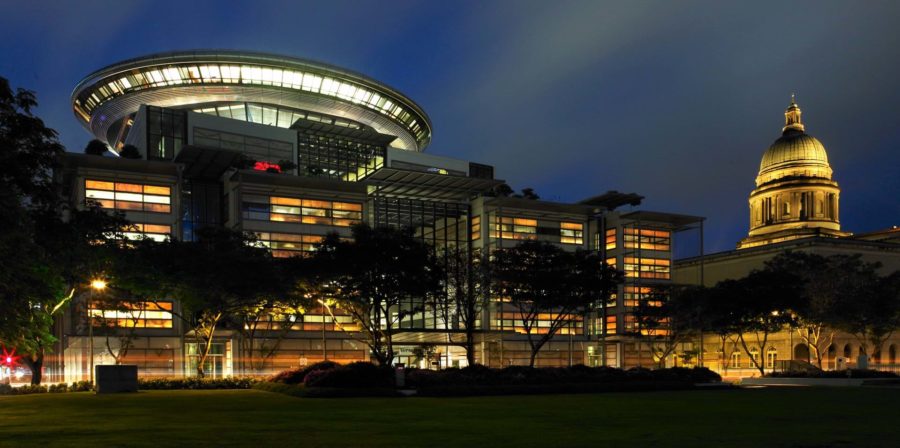
From 16-17 November 2018, LawTech.Asia co-organised the Legal Hackers APAC Summit together with SG Legal Hackers and the Singapore Academy of Law. This saw over twenty Legal Hackers chapter organizers from at least ten different countries in the Asia-Pacific region converge in Singapore to discuss the latest developments in law, technology and innovation in the APAC region.
The list tracks the likely movers and shakers of the legal industry in 2019, and LawTech.Asia is fortunate to be named alongside luminaries such as Ms Teresa Cheng (Hong Kong Secretary of Justice) and Ms Melissa Kaye Pang (President of the Hong Kong Law Society) for this year’s edition.
LawTech.Asia has an unwavering goal – to inspire legal innovation through partnerships and thought leadership. By the nature of our work, we walk alongside and are supported by giants who stand tall in their fields. Hence, this achievement has come very much as a pleasant surprise to all of us. We have met many leaders at the forefront of legal tech in the region, all of whom would more than deserve a spot on the list.
Nevertheless, this recognition only strengthens our resolve to work even harder towards our vision of become “The Economist of legal technology in Asia”.
We dedicate this to all of LawTech.Asia’s partners. This recognition belongs to you as much as it means to us.
From all of us at LawTech.Asia, a very big thank you.
It has been a joy working with you in 2018. All of us at LawTech.Asia would like to wish you a very fruitful 2019!
Looking Back at 2018
2018 has been a tremendous year for LawTech.Asia. We produced a total of 28 articles’ worth of thought leadership, industry insights, and conversation points (not too bad for a team of volunteers!). We were appointed Media Partner for major legal tech conferences (TechLaw.Fest 2018 and LexTech 2018). We co-organised local and regional legal tech events, such as the APAC Legal Hackers Summit 2018 and the SG Legal Tech Meetup. We engaged in collaborations with overseas legal tech companies, such as Resolve Disputes Online.
With these projects, LawTech.Asia’s visibility has grown. We’ve been told that our articles – which are known for their neutrality, substance and clarity of thought – are something to look forward to. These words of encouragement mean much to us, and strengthen our resolve to do even better.
Throughout 2018, LawTech.Asia has taken big strides towards its goal: to raise awareness, interest and thought leadership on the legal tech sector in Singapore and the region.
Internally, we’ve also expanded our team – from five members to the current 14, and are in the midst of expanding further to meet our manpower and resource needs.
Looking forward to 2019
There remains much work to be done. The legal tech sector in the region continues to develop, and there are still many minds and hearts that we can – and should – be touching. In this game, we are in a constant race against man, machine, and time.
With that, our focus in 2019 is to better position ourselves as The Economist of legal technology in Asia. To that end, we will put even more effort into producing thought leadership that is relevant, regional and respected. We also aim to strengthen our network of partners, with whom we hope to build a resilient community of legal innovators. We hope to share more details on these initiatives soon.
All of these would not have been possible without your continued readership and support for LawTech.Asia. For that, you have our deepest thanks. Thank you for partnering and journeying with us in 2018, and we hope you will continue to support us this year.
From all at LawTech.Asia, here’s wishing you a very Happy New Year!
Written by Maryam Salehijam (RDO) | Edited by Josh Lee
International commercial courts (“ICCs”) have been gaining attention as a new forum for the resolution of commercial disputes. Notable examples include the London Commercial Court, the Dubai International Financial Centre Courts (“DIFCC”), the Netherlands Commercial Courts, and the Singapore International Commercial Courts (“SICC”). There are commentaries and articles that discuss the purpose of ICCs and how they complement arbitration in the international dispute resolution landscape. This article does not intend to wade into that well-traversed discourse. Suffice it to say that ICCs broadly serve the following purposes:
Provide a platform for cases that are better suited for a process that is “relatively open and transparent, equipped with appellate mechanisms, the options of consolidation and joinder, and the assurance of a court judgment”[1];
Allow disputants to avoid problems faced by arbitration (e.g. increasing judicialization and laboriousness in process resulting in delays accompanied by rising costs, unpredictability in the enforcement of arbitral awards, or lack of consistency in arbitral decisions)[2]; and
Facilitate the harmonisation of commercial laws and practices.
As ICCs are a modern development, they have attempted to incorporate modern technologies to enhance their ability to deal with the cross-border, large-scale nature of the cases that they deal with. This article takes a quick look at the following two questions:
To what extent should the adoption of technology be a priority for an ICC?
Would ICCs be able to leverage the upcoming wave of online dispute resolution (“ODR”)?
Written by Amelia Chew, Jennifer Lim Wei Zhen, Josh Lee Kok Thong, and Tristan Koh
The LawTech.Asia is proud to publish the first-ever detailed outline of the legal technology sector in Singapore (as far as we are aware)!
This article is the result of a months-long project to map out the root, state and outlook of the legal technology sector in Singapore, and furthers LawTech.Asia’s fundamental purpose of improving awareness, knowledge and interest in legal technology. It is hoped that this article will be a helpful piece for legal professionals, legal technologists and law students to have a bird’s eye-view of legal technology in Singapore, and to assist in the building of a thriving legal tech community in Singapore.
While intended to be extensive, the article does not purport to be exhaustive or authoritative, or to express the position of any particular organisation or initiative. This article will be a “living document” that will continue to be updated as more news comes to the fore.
At the outset, the authors wish to express thanks for the innumerable sources of information available online, without which this project would not have been possible. Any mistakes herein remain the authors’ own.