

Asia's Leading Law & Technology Review

Category: Access to Justice Page 7 of 8

#LegalHackers Profile: Kanan Dhru, Legal Hackers India

Reading time: 6 minutes

Interview by Swathi Bhat | Edited by Amelia Chew

In November 2018, LawTech.Asia co-organised the inaugural APAC Legal Hackers Summit alongside Singapore Legal Hackers and the Singapore Academy of Law’s Future Law Innovation Programme (FLIP), bringing together Legal Hackers chapter organisers in the region to share insights on legal innovation across APAC. Legal Hackers is a global movement of lawyers, policymakers, designers, technologists, and academics who explore issues and opportunities where technology can improve and inform the practice of law, and where law, legal practice, and policy can adapt to rapidly changing technology. In this series, we profile Legal Hackers chapter organisers who are driving legal innovation in their cities.  

LawTech.Asia had the chance to catch up with Kanan Dhru, Founder of Lawtoons, LawForMe and Research Foundation for Governance in India, and chapter organiser at Legal Hackers India, who was not able to attend the APAC Legal Hackers Summit due to work commitments. Here, she shares her insights on LegalTech projects in India and the role of technology in the legal sector.
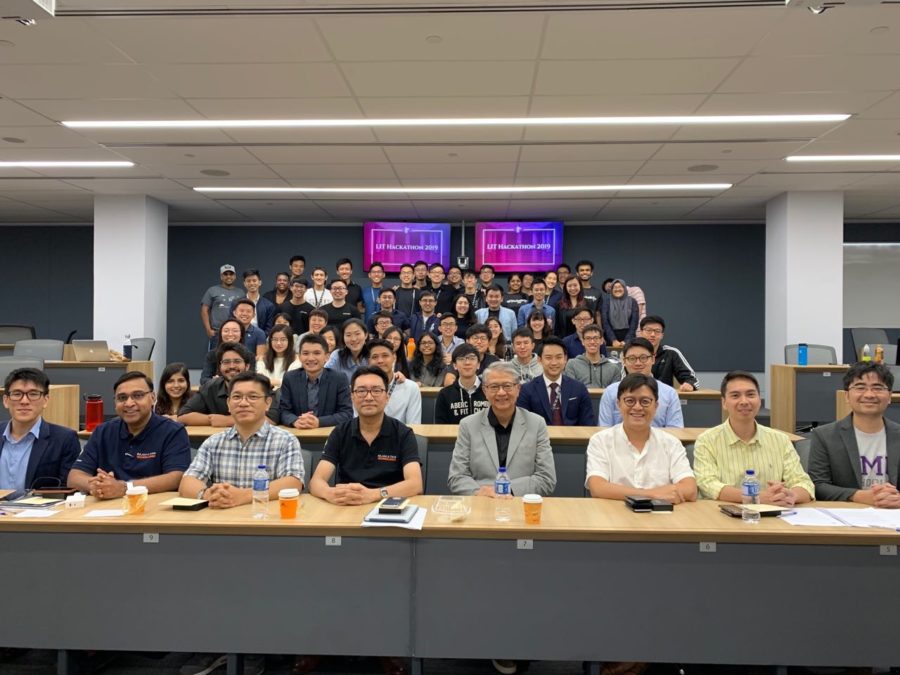

Hacking Through the Gordian Knot – The LIT Hackathon 2019

Reading time: 9 minutes

Written by Josh Lee | Edited by Jennifer Lim Wei Zhen, Wan Ding Yao

Introduction

It is a classic Gordian Knot. A legal industry that is highly risk-averse, and heavily reliant on precedents and traditional ways of work. Lawyers who are too occupied with work to generate innovative ideas, let alone implement them. Technology that is believed to be too inaccessible and alien to a profession that is beginning to struggle with disruption. All these, with the backdrop of rising costs, inefficiencies (and long hours), and barriers to access to justice.

The legal industry’s solution to this? The hackathon.

Zegal 2.0: Product Report

Reading time: 6 minutes

Written by Tristan Koh, Utsav Rakshit | Edited by Josh Lee

Introduction

Zegal is a collaborative cloud-based legal technology platform that aims to transform the way legal services, such as document generation and legal workflow management,  are delivered. Formerly Dragon Law, it has come a long way from starting off purely as an automated contract generation software. Today, the platform integrates automated contract generation seamlessly with legal workflow management in the cloud.

LawTech.Asia was given a chance to meet with Zegal Singapore’s Co-founder, Stephan Hablutzel, and view an in-depth product demo of Zegal’s latest product, Zegal 2.0.

Stephan formerly worked as a top-level executive in several MNCs. From his frequent use of legal services in the past, he and the Zegal team have used their deep understanding of common pain points in legal services to create a product that is client-centric. In particular, Zegal makes legal services far more accessible to small and medium-sized companies and eschew the traditional reservation of full-scale legal services for large corporations.

Legal Hackers APAC Summit 2018 – A Summary

Reading time: 7 minutes

Written by Cai Xiaohan | Edited by Josh Lee

From 16-17 November 2018, LawTech.Asia co-organised the Legal Hackers APAC Summit together with SG Legal Hackers and the Singapore Academy of Law. This saw over twenty Legal Hackers chapter organizers from at least ten different countries in the Asia-Pacific region converge in Singapore to discuss the latest developments in law, technology and innovation in the APAC region.

The APAC Legal Hackers Summit 2018 welcome page. (Image credit: Legal Hackers Singapore)

RDO x LawTech.Asia: International Commercial Courts and the Role of Technology

Reading time: 4 minutes

Written by Maryam Salehijam (RDO) | Edited by Josh Lee

International commercial courts (“ICCs”) have been gaining attention as a new forum for the resolution of commercial disputes. Notable examples include the London Commercial Court, the Dubai International Financial Centre Courts (“DIFCC”), the Netherlands Commercial Courts, and the Singapore International Commercial Courts (“SICC”). There are commentaries and articles that discuss the purpose of ICCs and how they complement arbitration in the international dispute resolution landscape. This article does not intend to wade into that well-traversed discourse. Suffice it to say that ICCs broadly serve the following purposes:

  1. Provide a platform for cases that are better suited for a process that is “relatively open and transparent, equipped with appellate mechanisms, the options of consolidation and joinder, and the assurance of a court judgment”[1];
  2. Allow disputants to avoid problems faced by arbitration (e.g. increasing judicialization and laboriousness in process resulting in delays accompanied by rising costs, unpredictability in the enforcement of arbitral awards, or lack of consistency in arbitral decisions)[2]; and
  3. Facilitate the harmonisation of commercial laws and practices.

As ICCs are a modern development, they have attempted to incorporate modern technologies to enhance their ability to deal with the cross-border, large-scale nature of the cases that they deal with. This article takes a quick look at the following two questions:

  1. To what extent should the adoption of technology be a priority for an ICC? 
  2. Would ICCs be able to leverage the upcoming wave of online dispute resolution (“ODR”)? 

Page 7 of 8

Powered by WordPress & Theme by Anders Norén