
Asia's Leading Law & Technology Review

Category: Lawyers Page 11 of 17

Disruptive Legal Technologies – Is Ethics Catching Up?

Reading time: 6 minutes

Written by Alvin Chen and Stella Chen (Law Society of Singapore)

Editor’s Note: This article was first published in the August 2018 issue of the Singapore Law Gazette, the official publication of the Law Society of Singapore. Reproduced with permission.

In December 2017, DeepMind, a leading AI company, sent ripples through the AI world when it announced that it had developed a computer program (known as “AlphaGoZero” or “AlphaZero”) which learned the rules of three games – chess, Shogi and Go – from scratch and defeated a world-champion computer program in each game within 24 hours of self-learning.1 What was remarkable about DeepMind’s achievement was the program’s “tabula rasa” or clean slate approach which did not refer to any games played by human players or other “domain knowledge”.2 Yet, DeepMind’s program was able to develop an unconventional and some say, uncanny,3 methodology in surpassing current computer understanding of how to play the three games.

Referring to an earlier version of DeepMind’s program (“AlphaGo”) which defeated the (human) world champion in Go in 2016, the legal futurist Richard Susskind considers such innovative technologies to be “disruptive”. In his international bestseller Tomorrow’s Lawyers: An Introduction to Your Future (“Tomorrow’s Lawyers“)Susskind defined “disruptive” as something that would “fundamentally challenge and change conventional habits”.4


E-Discovery: Artificial Intelligence & Predictive Coding – Discovering the Way Forward

Reading time: 5 minutes

Written by Emily Tan | Edited by Jennifer Lim Wei Zhen, Josh Lee, Maryam Salehijam (Resolve Disputes Online)

Introduction

Cases turn on their facts. Lawyers depend on both the law and the specific circumstances of their client’s case to make a convincing argument for their client. This makes the discovery process, where the available information is sifted through to identify relevant evidence, a crucial step in any case.  

However, discovery is by its nature a slow and laborious process. Countless hours are spent digging through documents, emails and other such sources, searching for the key factors which may make or break a case. This “time-drain” has been exacerbated by the digitalisation of work, which has exponentially increased the volume of documents that lawyers have to analyse. In addition, it is typically the junior lawyers who are delegated to do the discovery task — which explains the television stereotype of young lawyers poring over cartons and cartons of documents late into the night. 

Legal Tech 101: Journeying into Singapore’s legal technology space

Reading time: 7 minutes

Written by Tristan Koh | Edited by Ian Lee, Josh Lee, Utsav Rakshit

Student readers of LawTech.Asia would be familiar with interviews and opinion pieces available on this site on Singapore’s legal technology (“legal tech”) industry. Nevertheless, interested students may be curious to explore further avenues into this buzzing, high-tech industry.

Written from the perspective of a university student, this article covers several basic ways of journeying into legal tech in Singapore. While this article aims to be comprehensive, the examples raised herein are certainly non-exhaustive. The ideas shared here may also be useful for working professionals.

In our view, there are four broad ways of entering the legal tech industry: (a) developing skills, (b) enrolling in a relevant degree(s), (c) participating in legal tech activities and events, or (d) through writing.

LawTech.Asia Quick Chats – Associate Professor Goh Yihan, Dean, SMU School of Law

Reading time: 5 minutes

Interview by Josh Lee & Wan Ding Yao | Edited by Amelia Chew

In June 2018, the Singapore Management University (“SMU”) School of Law won a major grant of $4.5 million from the National Research Foundation (“NRF”) and the Infocomm Media Development Authority (“IMDA”) following a competitive application process among several Institutes of Higher Learning in Singapore. With the grant, the SMU School of Law set up a new Centre for AI and Data Governance (“CAIDG”). CAIDG aims to drive thought leadership on AI and data governance in Singapore, and serve as a centre for knowledge exchange with experts worldwide.

LawTech.Asia received an exclusive opportunity to interview Associate Professor Goh Yihan, Dean of the SMU School of Law and Director of CAIDG. Here, Prof Goh shares his view on how and when technological disruption will make a major impact on the local legal industry, and how the SMU School of Law is preparing its students to face that disruption.

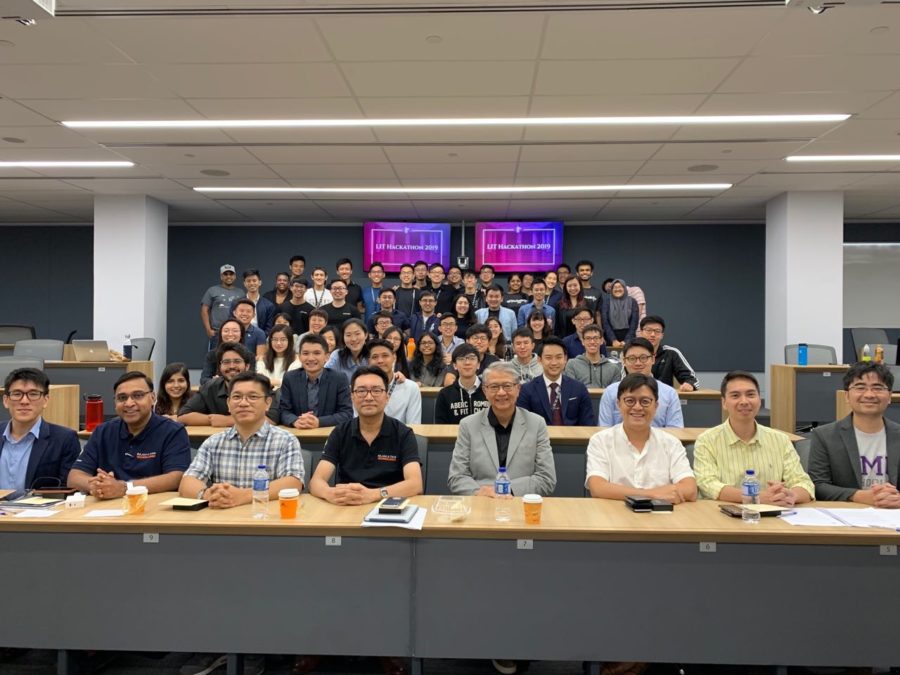
Hacking Through the Gordian Knot – The LIT Hackathon 2019

Reading time: 9 minutes

Written by Josh Lee | Edited by Jennifer Lim Wei Zhen, Wan Ding Yao

Introduction

It is a classic Gordian Knot. A legal industry that is highly risk-averse, and heavily reliant on precedents and traditional ways of work. Lawyers who are too occupied with work to generate innovative ideas, let alone implement them. Technology that is believed to be too inaccessible and alien to a profession that is beginning to struggle with disruption. All these, with the backdrop of rising costs, inefficiencies (and long hours), and barriers to access to justice.

The legal industry’s solution to this? The hackathon.

Page 11 of 17

Powered by WordPress & Theme by Anders Norén